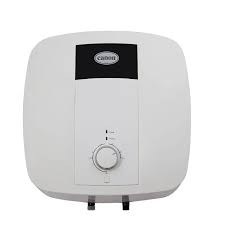
.Working Principle
Water heaters operate on the basic principles of thermodynamics, primarily:
-
Conduction (heat transfer through solid surfaces),
-
Convection (movement of hot water upward and cold water downward),
-
Thermostatic control (to regulate temperature).
Key Components and Their Functions
1. Tank (in storage models)
-
Material: Usually steel with an internal glass lining to prevent rust.
-
Function: Stores hot water and maintains it at a preset temperature.
-
Insulated to reduce standby heat loss (via foam or fiberglass).
2. Heating Element (Electric) / Burner (Gas)
-
Electric Heater: Contains one or two immersion heating elements similar to those in an electric kettle.
-
Gas Heater: Uses a burner assembly beneath the tank. Combustion heats the bottom of the tank.
-
Some advanced systems use modulating elements for efficient energy use.
3. Thermostat
-
Detects water temperature and turns the heating element or burner on or off.
-
Typically set between 110°F to 140°F (43°C to 60°C).
-
In electric models, each heating element may have its own thermostat.
4. Dip Tube
-
A long tube that directs cold water to the bottom of the tank.
-
Promotes stratification: cold water at the bottom, hot water at the top.
5. Hot Water Outlet
-
Located at the top of the tank, where hot water naturally rises.
-
Delivers hot water to the home’s plumbing system.
6. Anode Rod
-
Sacrificial metal rod (usually magnesium or aluminum).
-
Attracts corrosive elements in water to prevent tank rust.
-
Crucial for prolonging tank life (should be checked every 2–3 years).
7. Temperature & Pressure Relief Valve (T&P Valve)
-
Safety mechanism.
-
Releases water if the temperature exceeds ~210°F or pressure goes above 150 psi.
-
Prevents tank explosions due to overpressure.
8. Flue Baffle / Exhaust Vent (Gas Models)
-
In gas models, exhaust gases from combustion rise through a central flue.
-
A baffle in the flue increases contact time for heat exchange before venting out.
-
Flue gases exit via chimney or side vent.
9. Drain Valve
-
Located at the bottom.
-
Used to flush out sediment or to drain the tank for maintenance.
Step-by-Step Operation
For Electric Water Heaters:
-
Cold water enters the tank through the dip tube.
-
Thermostat detects the water is below the set temperature.
-
One or both heating elements activate.
-
As water heats, convection currents form (hot water rises).
-
When temperature is reached, the thermostat cuts off power.
-
When a hot water tap is opened, hot water exits through the outlet.
-
Cold water refills the tank, and the cycle continues.
For Gas Water Heaters:
-
Cold water enters via dip tube.
-
Thermostat senses water is cold, triggering gas valve to open.
-
Gas burner ignites via a pilot light or electronic igniter.
-
Flame heats the bottom of the tank; hot gases rise through the central flue.
-
Heat is transferred to the surrounding water through conduction.
-
Heated water rises and is stored at the top until needed.
-
Exhaust gases exit via the flue system.